


Poland’s experience in developing industrial parks can support the reconstruction of Ukraine.
Discussion on the industrial development model
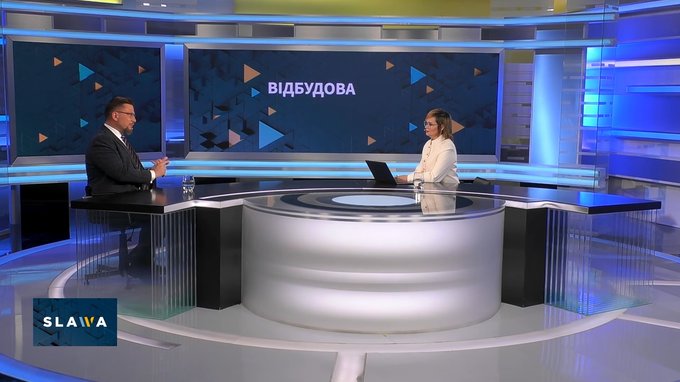
On 20 May 2026, the SLAWA LIFE channel published an episode of the programme “Odbudowa” (“Reconstruction”) devoted to the role of industrial parks and special economic zones in Poland’s economic development and their importance for the future rebuilding of Ukraine. The guest of the programme was Wiktor Cichoń, Director of the Industrial Development Agency JSC (ARP S.A.) Branch in Mielec, who presented insights from the operation of the EURO-PARK MIELEC Special Economic Zone and the evolution of Poland’s investment support model.
The conversation started from the assessment that over the last three decades Poland has built one of the most advanced industrial park models in Europe. The programme highlighted that solutions based on special economic zones, investment infrastructure and a system of tax incentives have helped to reduce unemployment, attract capital and create jobs.
The importance of SEZs and industrial parks
The discussion underlined that the first special economic zone in Poland was established in Mielec in 1995, and that the adopted model has since been developed and adapted to the changing needs of investors. It was noted that since 2018 investment support has been extended beyond the fenced areas of the parks, which has enabled entrepreneurship to grow on a much broader scale.
A key element of this model are investment incentives, including tax reliefs, access to ready‑to‑use infrastructure and the operation of companies within well‑developed economic ecosystems. The programme also pointed out that such an environment supports the development of the national supply chain, strengthens local content and enhances the competitiveness of industrial regions.
Prospects for Polish‑Ukrainian cooperation
One of the main themes of the programme was the possibility of using Poland’s experience in the process of rebuilding Ukraine. It was emphasised that industrial parks can become one of the key tools of economic reconstruction, particularly in the context of attracting investment, developing production facilities and building lasting economic ties between Poland and Ukraine.
The discussion also pointed to the growing importance of border regions, including Podkarpackie and Lubelskie, as natural areas for international projects and industrial cooperation. From the perspective of development institutions, this means strengthening the industrial potential of the region, developing new competences and creating conditions for long‑term economic resilience.
Mielec’s experience in practice
The programme cited the example of the EURO-PARK MIELEC SEZ as the first special economic zone in Poland. It was noted that the development of this centre contributed to job creation, attracting investment and rebuilding the economic potential of a region which, in the 1990s, was struggling with high unemployment and the effects of economic transformation.
The experience of Mielec presented in the programme shows that well‑designed investment support instruments can play an important role not only in local development, but also in the broader industrial policy of the state. In this context, special economic zones and industrial parks remain an important tool for supporting strategic investments, strengthening the potential of Polish industry and developing economic cooperation across Central and Eastern Europe.